A reliable oven is one of the most important appliances in any modern kitchen. Whether preparing daily family meals or hosting special gatherings, homeowners depend on consistent oven performance to achieve accurate cooking results. However, over time, even high-quality ovens can develop issues that affect temperature accuracy, cooking consistency, energy efficiency, and overall performance.
Oven performance repair is not simply about fixing a breakdown. It involves identifying the underlying causes of poor heating, uneven baking, delayed temperature response, or malfunctioning electronic controls before they become major problems. Understanding how ovens work and recognizing early warning signs can help homeowners maintain better cooking performance while extending appliance lifespan.
This guide explores common oven performance problems, diagnostic approaches, preventive maintenance practices, and professional repair solutions that help restore optimal cooking efficiency.
Why Oven Performance Matters
Many homeowners assume their oven is functioning properly as long as it produces heat. In reality, small performance issues can significantly affect cooking quality. A temperature difference of even a few degrees may lead to undercooked dishes, burnt baked goods, or inconsistent roasting results.
Proper oven performance contributes to:
- Accurate cooking temperatures
- Even heat distribution
- Reduced energy consumption
- Improved food quality
- Longer appliance lifespan
- Enhanced kitchen safety
Regular maintenance and timely repairs help prevent minor faults from escalating into expensive component failures.

Common Signs Your Oven Needs Performance Repair
Oven problems often develop gradually. Recognizing early symptoms allows for quicker diagnosis and more cost-effective repairs.
Uneven Cooking Results
One side of a tray may cook faster than the other, or baked items may brown inconsistently. These symptoms often indicate heating element issues, airflow restrictions, or temperature sensor problems.
Homeowners experiencing uneven baking can learn more about related causes through this guide on oven baking performance issues.
Inaccurate Temperature Readings
If recipes consistently require longer cooking times than expected, the oven may not be reaching the selected temperature. Faulty sensors, damaged thermostats, or electronic control failures are common causes.
Slow Preheating
An oven that takes significantly longer to preheat may have weakened heating elements, electrical problems, or calibration issues.
Unresponsive Controls
Digital displays and touch controls play a crucial role in modern oven operation. When buttons stop responding or settings become difficult to adjust, professional diagnosis is often required.
Problems involving electronic interfaces may be connected to issues similar to those discussed in this article about oven touchpad malfunctions.
Main Causes of Oven Performance Problems
Several components work together to maintain stable cooking temperatures. Failure in any one of these areas can negatively impact overall performance.
| Component | Common Problem | Impact on Performance |
|---|---|---|
| Heating Element | Burnout or damage | Uneven or insufficient heating |
| Temperature Sensor | Calibration errors | Incorrect cooking temperatures |
| Control Board | Electronic malfunction | Inconsistent operation |
| Convection Fan | Motor failure | Poor heat circulation |
| Door Seal | Heat leakage | Reduced efficiency |
| Door Hinges | Misalignment | Temperature instability |
The Role of Temperature Accuracy
Temperature accuracy directly affects cooking quality. Many homeowners are surprised to discover their oven temperature differs significantly from the displayed setting.
A malfunctioning thermostat or sensor can create temperature variations that lead to:
- Overcooked meals
- Undercooked food
- Inconsistent baking
- Increased energy usage
- Longer cooking times
Periodic performance testing helps identify calibration issues before they affect daily cooking routines.
Convection Systems and Airflow Performance
Modern ovens often rely on convection technology to distribute heat evenly throughout the cooking chamber. Convection fans circulate hot air, helping food cook more consistently and efficiently.
When airflow becomes restricted, hot and cold spots may develop inside the oven. This can result from:
- Fan motor wear
- Accumulated grease
- Blocked ventilation openings
- Electrical supply issues
Routine cleaning and inspection can significantly improve airflow and cooking consistency.
For maintenance guidance, homeowners may find useful information in this resource covering oven convection fan cleaning.
Why Oven Doors Affect Performance
Many people overlook the importance of oven doors in maintaining proper cooking conditions. A damaged door seal or faulty hinge allows heat to escape, forcing the oven to work harder to maintain temperature.
Signs of door-related performance problems include:
- Excessive heat around the door frame
- Longer preheating times
- Increased energy consumption
- Uneven cooking results
Regular inspection of seals, hinges, and glass panels helps preserve thermal efficiency and cooking accuracy.
Control Boards and Smart Oven Technology
Today’s ovens often include advanced electronic control systems that manage temperature regulation, cooking modes, timers, and safety features. While these technologies improve convenience, they also introduce additional diagnostic complexity.
Control board failures may cause:
- Random shutdowns
- Error codes
- Temperature fluctuations
- Non-responsive settings
- Inconsistent heating cycles
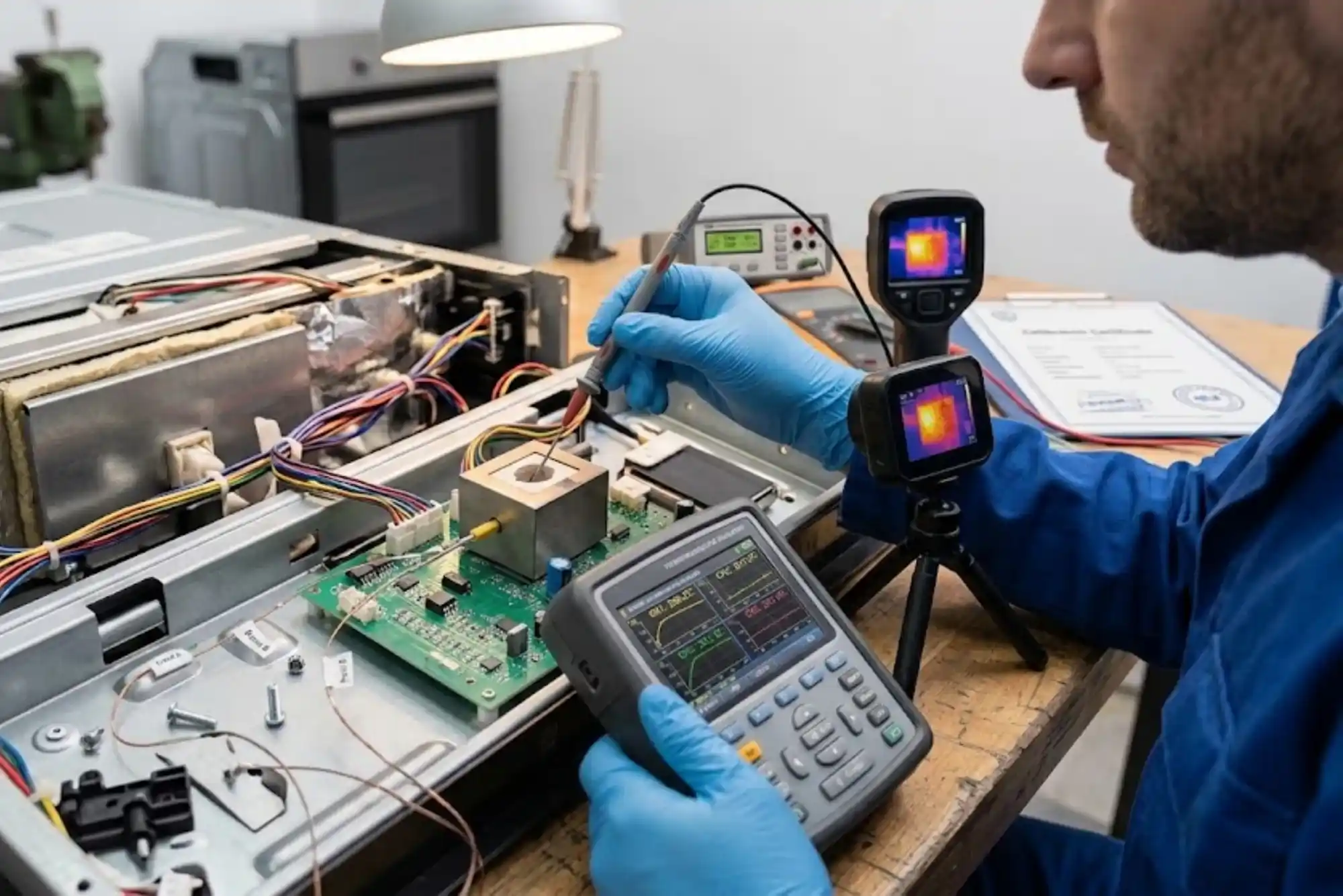
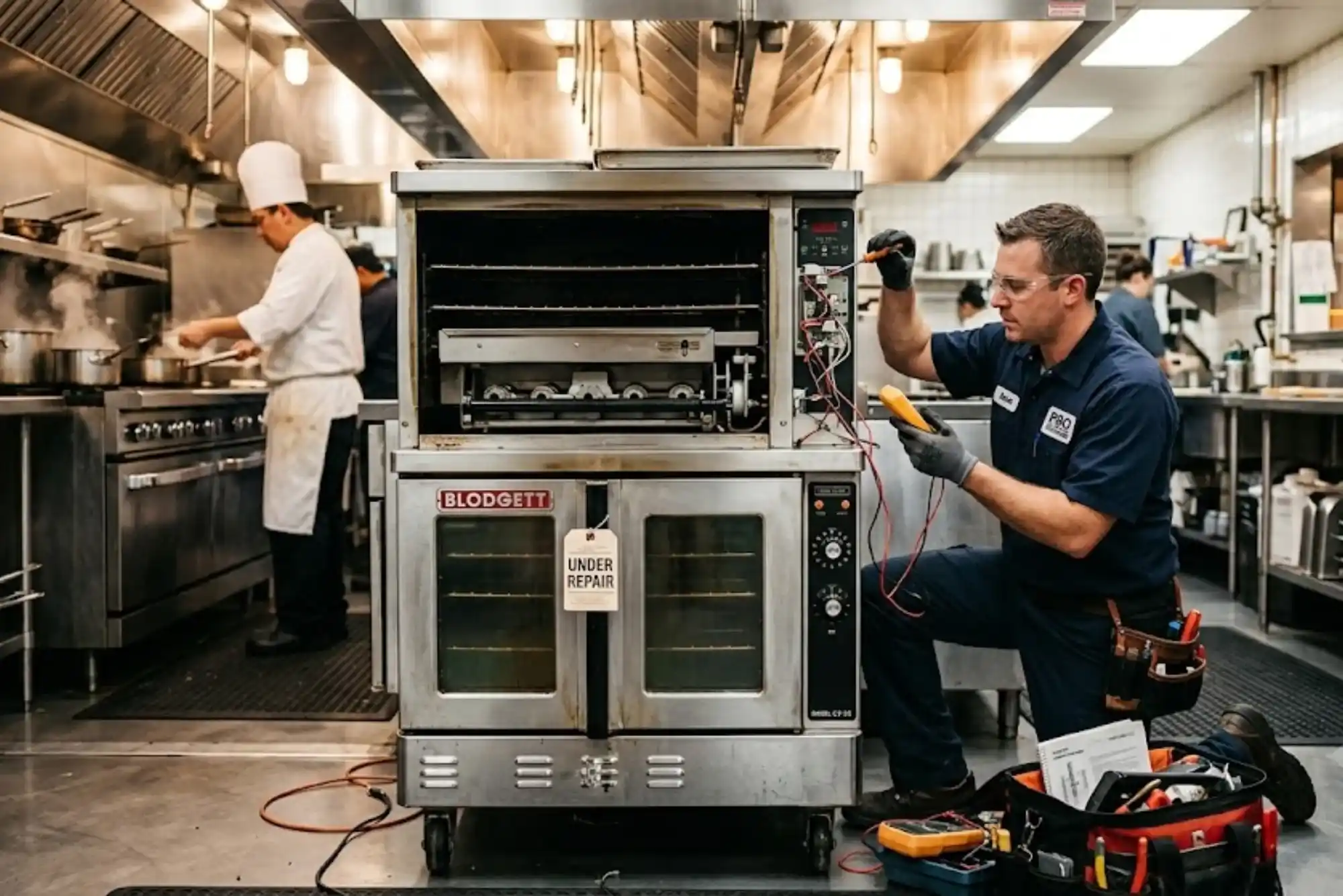
Professional technicians use specialized diagnostic equipment to evaluate electronic components and determine whether repair or replacement is the most effective solution.
Preventive Maintenance for Better Oven Performance
Preventive maintenance remains one of the most effective ways to avoid costly repairs and preserve oven efficiency.
Keep Interior Surfaces Clean
Food spills, grease buildup, and carbon deposits can interfere with heat distribution and airflow. Regular cleaning helps maintain consistent performance.
Inspect Heating Elements
Visual inspection can reveal cracks, discoloration, or uneven heating patterns that may indicate element deterioration.
Check Door Seals
Replacing worn gaskets prevents heat loss and improves energy efficiency.
Test Temperature Accuracy
Using an oven thermometer periodically helps verify calibration and identify developing issues.
Schedule Professional Inspections
Comprehensive evaluations can identify hidden wear before major failures occur. Regular assessments are especially valuable for heavily used household and commercial ovens.
Additional insights regarding maintenance programs can be found through these oven maintenance specialists resources.
When DIY Troubleshooting Is Appropriate
Some minor oven issues can be addressed safely by homeowners. Examples include:
- Cleaning interior surfaces
- Replacing oven light bulbs
- Checking power connections
- Inspecting door seals
- Verifying circuit breaker status
However, repairs involving gas systems, electrical wiring, control boards, or heating elements should generally be handled by qualified professionals due to safety concerns and technical complexity.
The Cost of Ignoring Performance Issues
Delaying oven repairs often increases long-term expenses. Minor faults frequently place additional stress on other components, accelerating wear throughout the appliance.
Potential consequences include:
- Higher utility bills
- Frequent cooking failures
- Shortened appliance lifespan
- Unexpected breakdowns
- Safety risks
- More expensive repairs later
Addressing performance concerns early typically results in faster repairs and lower overall maintenance costs.
Choosing Professional Oven Repair Services
Selecting experienced technicians is essential when dealing with complex oven performance problems. Qualified professionals possess the tools and expertise necessary to diagnose both mechanical and electronic issues accurately.
When evaluating repair providers, consider:
- Experience with multiple oven brands
- Diagnostic capabilities
- Availability of replacement parts
- Transparent service recommendations
- Preventive maintenance options
- Knowledge of modern electronic systems
A professional assessment helps determine whether repair, recalibration, component replacement, or broader maintenance services are required.
Long-Term Benefits of Proper Oven Performance Repair
Investing in oven performance repair offers benefits that extend beyond restoring immediate functionality. Well-maintained ovens operate more efficiently, deliver better cooking results, and experience fewer unexpected failures.
Long-term advantages include:
- Consistent food quality
- Improved energy efficiency
- Reduced repair frequency
- Enhanced appliance reliability
- Better kitchen safety
- Extended equipment lifespan
For households that rely heavily on cooking appliances, these benefits can translate into substantial savings and improved convenience over time.
Conclusion
Oven performance repair is an essential aspect of maintaining a functional and efficient kitchen. From temperature inaccuracies and uneven baking to airflow restrictions and electronic control failures, numerous factors can affect cooking quality and appliance reliability.
Understanding the warning signs, performing regular maintenance, and seeking professional assistance when necessary helps homeowners protect their investment while ensuring consistent cooking results. By addressing performance issues early and maintaining key components properly, ovens can continue delivering reliable service for many years while operating safely and efficiently.
Related Reading: Oven Repair and Installation
Related Reading: AC Performance Improvement Service