Reliable indoor cooling depends heavily on the condition of the evaporator coil. This essential AC component absorbs heat from indoor air and helps maintain comfortable temperatures throughout homes and commercial spaces. When the coil develops leaks, freezes over, or becomes clogged with dirt, cooling efficiency drops quickly and energy usage often increases.
Professional evaporator coil repair services focus on diagnosing cooling problems early, preventing compressor strain, and restoring proper airflow. Timely repairs can also help avoid larger HVAC failures that lead to expensive replacements.
Many cooling issues begin with small warning signs such as weak airflow, unusual odors, uneven room temperatures, or ice forming around the indoor unit. In several cases, these symptoms are linked to airflow-related AC performance problems.
What Is an Evaporator Coil and Why Does It Matter?
The evaporator coil is located inside the indoor section of an air conditioning system. Refrigerant flows through the coil while warm indoor air passes across it. During this process, heat is absorbed and removed from the living space, allowing cooler air to circulate back into the property.
A damaged or dirty coil affects the entire cooling cycle. Reduced heat absorption forces the AC system to work harder, increasing electricity consumption and placing extra pressure on components such as the compressor and blower motor.
Proper coil function contributes to:

- Consistent indoor cooling
- Improved air circulation
- Reduced humidity levels
- Lower energy consumption
- Longer AC system lifespan
Common Signs You Need Evaporator Coil Repair Services
Evaporator coil problems often develop gradually. Identifying early warning signs can prevent major system breakdowns.
Weak or Warm Airflow
One of the most noticeable symptoms is warm air coming from vents even while the AC remains operational. Restricted heat transfer inside the coil prevents effective cooling.
Ice Formation Around the Indoor Unit
Frozen evaporator coils usually indicate airflow restrictions, refrigerant issues, or excessive dirt buildup. Homeowners frequently notice visible ice on copper tubing or near the indoor air handler.
Detailed freezing-related problems are also commonly associated with AC unit freezing issues, especially during peak summer usage.
Unusual Odors from Vents
Moisture buildup around dirty coils can encourage mold and bacterial growth. This may produce unpleasant smells whenever the system operates.
Increased Electricity Bills
An overworked air conditioner consumes more energy to maintain indoor temperatures. Sudden spikes in utility costs may point toward coil inefficiency.
Water Leakage Around the Unit
Frozen coils often create excess condensation after thawing, leading to water accumulation around the indoor system.
Main Causes of Evaporator Coil Damage
Several mechanical and environmental factors contribute to evaporator coil failure. Understanding these causes helps property owners reduce future repair risks.
| Cause | Impact on Evaporator Coil |
|---|---|
| Dirty air filters | Restricts airflow and causes coil freezing |
| Low refrigerant levels | Reduces pressure and creates ice buildup |
| Corrosion | Leads to refrigerant leaks and weakened tubing |
| Poor maintenance | Allows dirt accumulation and efficiency loss |
| Blocked vents | Limits airflow across the evaporator coil |
Dirty Coils and Airflow Restrictions
Dust and debris gradually coat the evaporator surface, preventing proper heat exchange. Restricted airflow lowers system efficiency and increases freezing risks.
Routine maintenance procedures similar to air filter replacement and airflow maintenance help reduce strain on the cooling system.
Refrigerant Leaks
Small leaks inside evaporator tubing reduce refrigerant pressure and compromise cooling performance. In many cases, professional technicians use leak detection equipment to identify damaged areas before repairs begin.
Additional technical guidance on HVAC refrigerant systems can be found here: [Insert relevant reference link here]
Corrosion and Aging Components
Older evaporator coils naturally experience wear from continuous temperature fluctuations and moisture exposure. Corrosion weakens the coil structure and may eventually require replacement instead of repair.
Professional Evaporator Coil Repair Process
Professional AC technicians follow a structured diagnostic process to determine whether the coil can be repaired or requires replacement.
1. System Inspection
The repair process begins with a complete cooling system assessment. Technicians examine refrigerant pressure, airflow quality, thermostat operation, and electrical connections.
2. Coil Cleaning
Dirt accumulation is removed using specialized cleaning solutions and low-pressure equipment. Clean coils improve airflow and cooling performance significantly.
3. Leak Detection
Electronic leak detectors or nitrogen pressure testing may be used to identify refrigerant leaks within the evaporator assembly.
4. Refrigerant Recharge
After repairs are completed, technicians recharge the system with the correct refrigerant level according to manufacturer specifications.
5. Performance Testing
The final stage involves testing airflow, cooling temperature, humidity control, and system pressure to ensure proper operation.
Repair vs Replacement: Which Option Makes Sense?
Not every evaporator coil issue requires full replacement. The right decision depends on system age, severity of damage, repair costs, and overall cooling performance.
| Situation | Recommended Solution |
|---|---|
| Minor dirt buildup | Professional cleaning |
| Small refrigerant leak | Targeted repair and recharge |
| Severe corrosion | Coil replacement |
| Repeated freezing problems | Full system diagnosis |
| Older AC system | Replacement evaluation |
Property owners often benefit from professional evaluation before making replacement decisions. Repairing a newer system is usually more cost-effective, while aging systems with repeated failures may justify replacement.
How Preventive Maintenance Helps Avoid Coil Damage
Routine AC maintenance remains one of the most effective ways to prevent evaporator coil problems. Preventive servicing improves cooling performance while reducing long-term repair costs.
Well-maintained cooling systems typically experience:
- Improved energy efficiency
- Reduced risk of refrigerant leaks
- Better indoor air quality
- More consistent airflow
- Lower chance of compressor damage
Many homeowners also experience freezing-related issues connected to neglected maintenance, especially when dealing with ice formation on AC coils.
How Climate Conditions Affect Evaporator Coils
Hot and humid climates place extra stress on air conditioning systems. Continuous operation during long summer periods increases moisture exposure inside the evaporator section.
Dust accumulation also becomes a significant issue in areas with heavy outdoor particles and sand exposure. Dirty filters and blocked vents accelerate coil contamination, forcing the AC system to operate inefficiently.
Commercial buildings, apartments, and villas often require more frequent maintenance schedules depending on usage intensity and environmental conditions.
Benefits of Hiring Professional Evaporator Coil Repair Services
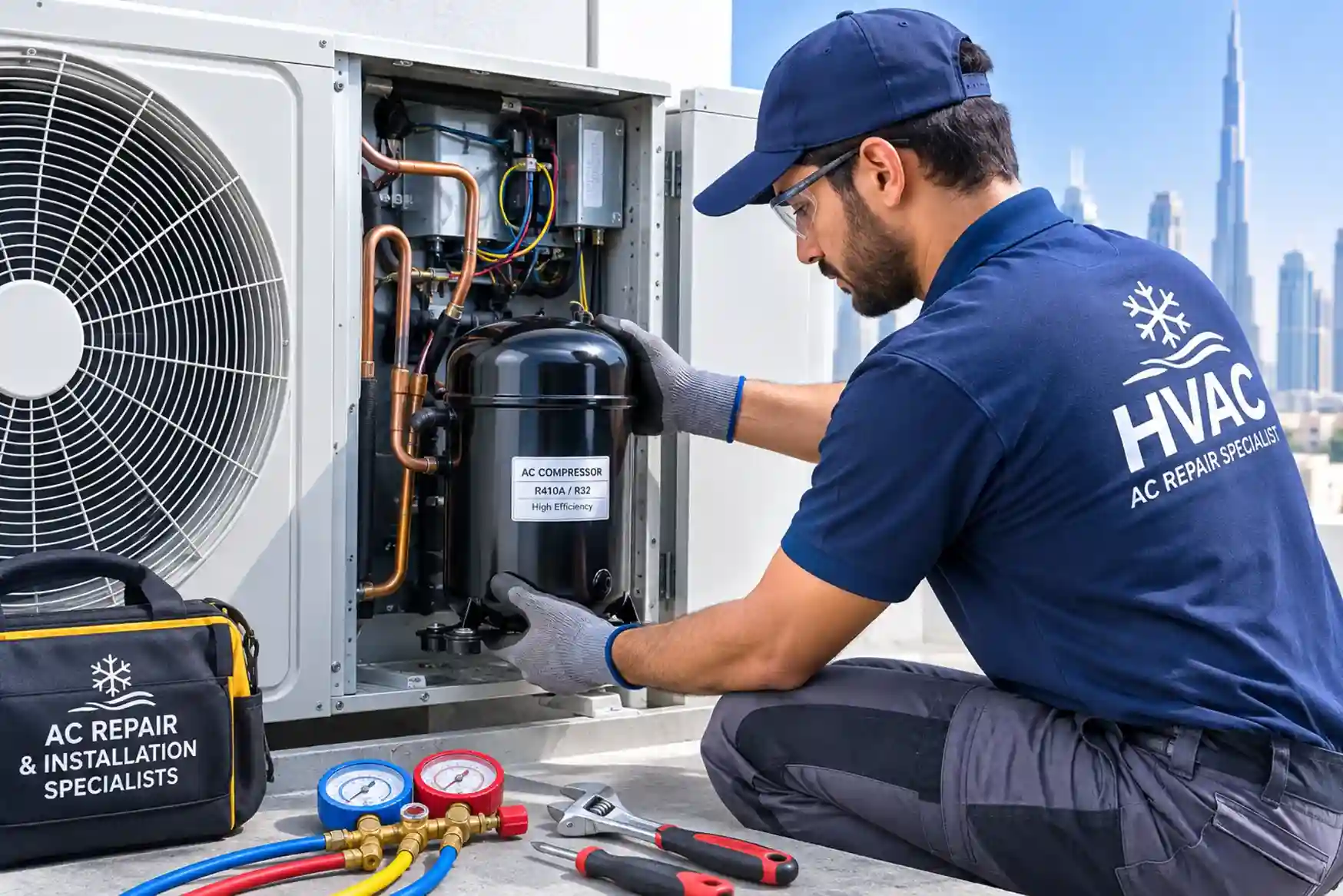
Professional HVAC technicians use specialized diagnostic tools that help identify hidden issues before they become severe. Attempting complex AC repairs without proper equipment can increase system damage and safety risks.
Experienced repair services typically provide:
- Accurate leak detection
- Safe refrigerant handling
- Efficient coil cleaning
- Electrical component inspection
- Long-term cooling performance optimization
Professional servicing also helps maintain manufacturer warranty conditions for many HVAC systems.
When to Schedule Immediate AC Coil Service
Some evaporator coil symptoms should never be ignored. Delaying service may damage the compressor, which is often one of the most expensive AC components to replace.
Immediate inspection is recommended when:
- The AC repeatedly freezes
- Cooling performance drops suddenly
- Water leaks appear indoors
- Strange smells persist from vents
- The system runs continuously without proper cooling
Many homeowners facing severe cooling issues eventually require broader services such as professional AC repair and maintenance to restore complete system performance.
Frequently Asked Questions
Can evaporator coils be repaired without replacement?
Yes. Minor leaks, dirt buildup, and airflow-related problems can often be repaired without replacing the entire coil. Severe corrosion or repeated refrigerant leaks may require replacement.
Why do evaporator coils freeze?
Frozen coils usually result from restricted airflow, dirty filters, low refrigerant levels, or blower motor problems that prevent proper heat exchange.
How long does evaporator coil repair take?
Simple cleaning and maintenance may take a few hours, while refrigerant leak repairs or coil replacements can require additional time depending on system complexity.
How often should AC evaporator coils be cleaned?
Most residential systems benefit from professional coil cleaning at least once or twice per year, especially in dusty environments or high-usage climates.
Is evaporator coil repair expensive?
Repair costs vary depending on the severity of damage, refrigerant type, accessibility, and whether replacement parts are required. Early diagnosis generally helps reduce repair expenses.
Conclusion
Evaporator coil repair services play a critical role in maintaining cooling efficiency, indoor comfort, and overall HVAC system reliability. Small airflow restrictions or refrigerant issues can quickly develop into larger mechanical failures when ignored.
Professional inspections, routine maintenance, and timely repairs help extend AC lifespan while reducing energy consumption and unexpected breakdowns. Whether dealing with frozen coils, weak airflow, or refrigerant leaks, addressing evaporator coil problems early remains the most effective approach for long-term cooling performance.
Related Reading: Fridge Evaporator Cover Panel