A dishwasher is one of the most convenient appliances in any home, saving time and effort while ensuring that dishes come out spotless and sanitized. However, when it starts leaking from the bottom, it can quickly turn from a helpful tool into a frustrating problem. A leak not only makes your kitchen floor wet and slippery but can also cause long-term damage to flooring, cabinets, and nearby appliances if not addressed quickly. Understanding why dishwashers leak and how to fix the issue is essential for both homeowners and tenants who rely on this appliance daily.
Dishwasher leaks are often misunderstood as a single problem, but in reality, there are multiple potential causes ranging from worn-out seals to improper installation. This detailed guide explores the common reasons behind leaks, the steps you can take to troubleshoot, and the best practices to ensure long-term appliance health.
Understanding the Nature of Dishwasher Leaks
When a dishwasher leaks from the bottom, it can either be a minor issue that requires a simple adjustment or a more serious problem needing professional repair. The bottom of the unit is where the water collects during a wash cycle, and any malfunction in this area can result in leaks spreading out to the floor.
Unlike surface spills, these leaks often occur during the washing or rinsing cycle and may only appear intermittently, making them harder to detect. Some homeowners notice puddles after every wash, while others see them occasionally. The consistency of the leak can be a clue as to its cause. For instance, small leaks may come from worn-out door gaskets, while more severe leaks could stem from pump or hose failures.
The Role of Seals and Gaskets
One of the most common reasons dishwashers leak from the bottom is damaged or worn-out rubber seals. The dishwasher door has a rubber gasket that ensures a watertight seal during operation. Over time, exposure to hot water, detergents, and constant pressure can cause these gaskets to weaken, crack, or lose their flexibility.
When this happens, water begins to escape through the gaps, leading to puddles at the bottom of the unit. Inspecting the gasket is often the first step in diagnosing a leak. If the seal looks brittle or cracked, replacing it can resolve the issue.

Additionally, the tub seal at the bottom of the dishwasher, where the motor connects to the unit, may also wear out over time. This seal is crucial in preventing water from leaking through the motor shaft area. If it fails,Post Category, the dishwasher may leak even when the gasket around the door appears intact.
Hoses and Connections
Dishwashers rely on several hoses to transport water in and out of the unit. These include the water inlet hose, the drain hose, and internal circulation hoses. Over time, these hoses can loosen, crack, or develop holes, causing water to escape during the cycle.
A leaking dishwasher bottom could be a result of a loose clamp or connection. Vibrations during operation may gradually weaken these fittings, especially if the dishwasher is not properly leveled. Checking hoses for signs of wear, tightening loose clamps, or replacing damaged parts can prevent future leaks.
Pump and Motor Problems
The pump assembly is located at the bottom of the dishwasher and is responsible for circulating water during the wash and rinse cycles, as well as draining it at the end. If the pump housing or motor shaft seal fails, water may escape onto the kitchen floor.
Pump issues can be more complex to address compared to gaskets or hoses. In many cases, professional repair services are required to replace faulty pumps or motors. This type of leak usually worsens over time and should not be ignored, as a failing pump can eventually stop the dishwasher from functioning altogether.
Detergent and Loading Mistakes
Not all leaks are caused by faulty parts. Sometimes, the way a dishwasher is used plays a major role in creating water overflow. Using too much detergent, the wrong type of detergent, or improperly loading dishes can cause water and soap suds to spill out from the bottom of the door.
Modern dishwashers are designed to work with specific detergents and rinse aids. Using regular dish soap instead of dishwasher detergent can produce excessive suds that push water past the seals. Similarly, blocking the spray arms with incorrectly placed dishes can cause water to deflect toward the door, resulting in leaks.
Being mindful of detergent quantity and following manufacturer guidelines for loading dishes can help prevent unnecessary water leakage.
Installation Errors
A dishwasher that is not properly leveled can also leak from the bottom. If the unit tilts forward, water may pool near the door gasket and escape onto the floor. Checking the leveling feet and adjusting them to ensure the dishwasher sits evenly can eliminate this problem.
Improper installation of hoses or failure to secure connections tightly can also cause leaks soon after setting up a new dishwasher. If the problem occurs with a recently installed appliance, it is wise to double-check the installation before assuming a part has failed.
Preventing Water Damage
When dealing with a leaking dishwasher, it is important to act quickly to prevent water damage. Even small, consistent leaks can seep into kitchen flooring and cabinets, leading to mold growth, wood warping, and long-term structural issues.
Placing a towel under the dishwasher to catch drips is only a temporary solution. Identifying and fixing the root cause ensures that the problem does not escalate. In cases where water damage has already occurred, homeowners may need to consult professionals not only for appliance repair but also for water restoration services.
When to Call a Professional
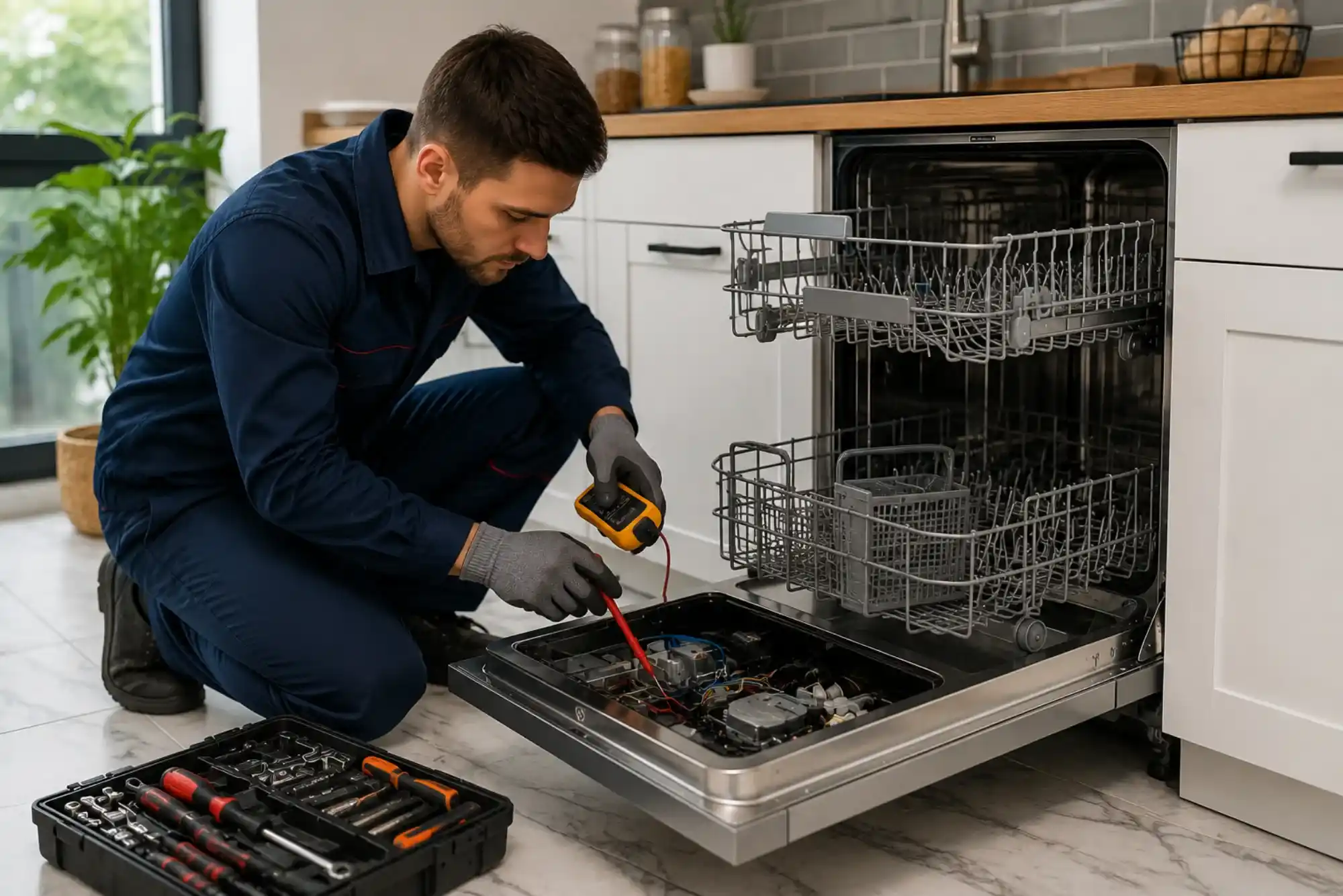
While some minor leaks can be addressed with DIY fixes, such as replacing a door gasket or tightening a hose clamp, other problems require professional expertise. If you suspect that the pump, motor, or internal seals are failing, hiring a certified technician ensures that the repair is done correctly and safely.
Professional dishwasher repair services can also provide thorough inspections to identify less obvious issues. Sometimes, multiple small factors contribute to a leak, and addressing only one may not completely solve the problem. By consulting experts, you reduce the risk of recurring issues and extend the lifespan of your appliance.
Extending Dishwasher Life Through Maintenance
Preventing leaks in the first place is always better than dealing with the aftermath. Regular maintenance can go a long way in keeping your dishwasher in top condition. Cleaning the filter, ensuring spray arms are not clogged, and wiping down the door gasket regularly helps maintain proper function.
It is also important to avoid overloading the dishwasher and to follow manufacturer recommendations for detergent use. Small steps such as these not only prevent leaks but also improve the appliance’s efficiency, ensuring cleaner dishes with less energy and water consumption.
A dishwasher that leaks from the bottom should never be ignored. While it might start as a minor inconvenience, it can quickly escalate into a major household problem with costly repairs. By understanding the common causes—from worn-out gaskets and loose hoses to pump failures and improper usage—you can take steps to address the issue before it worsens.