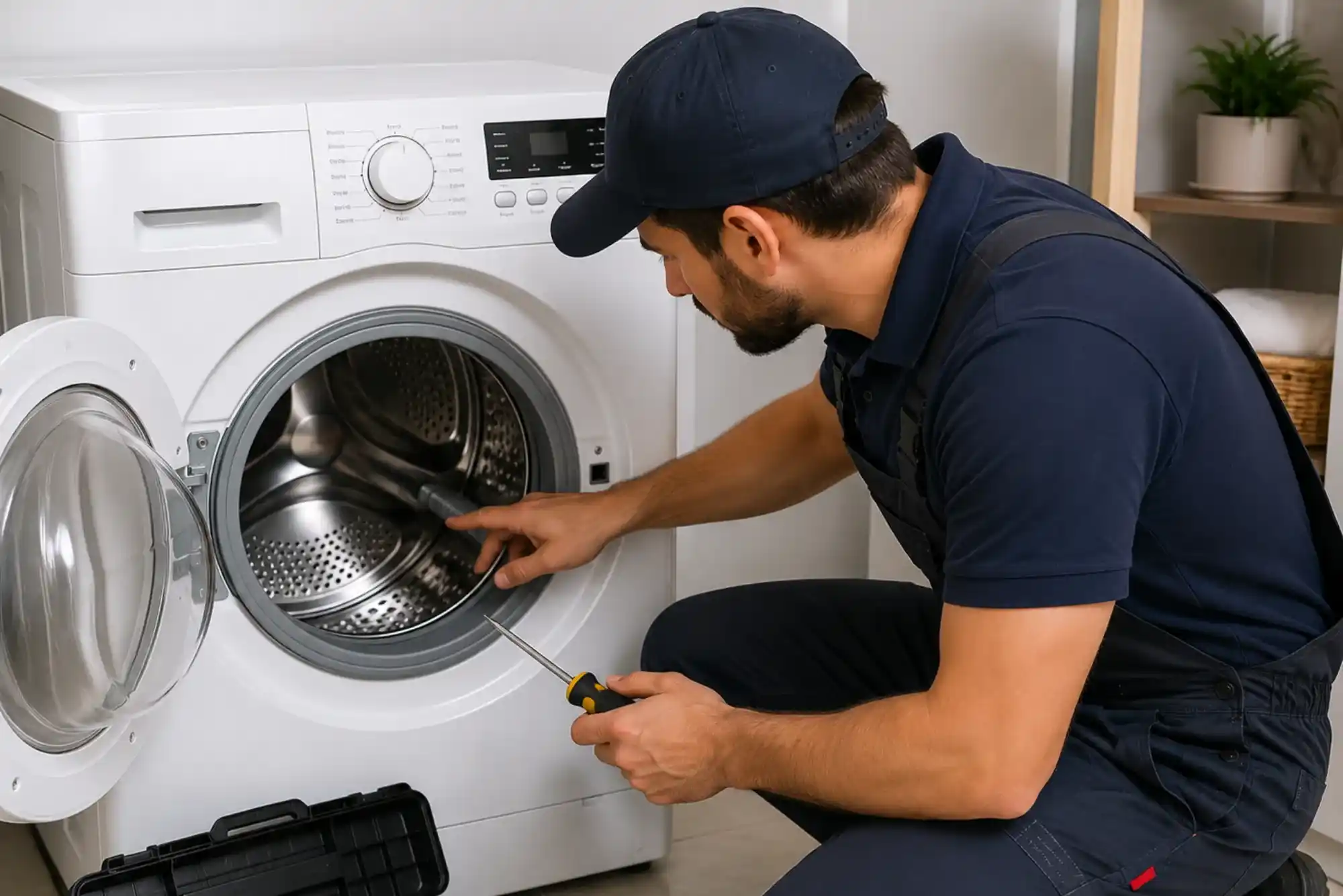
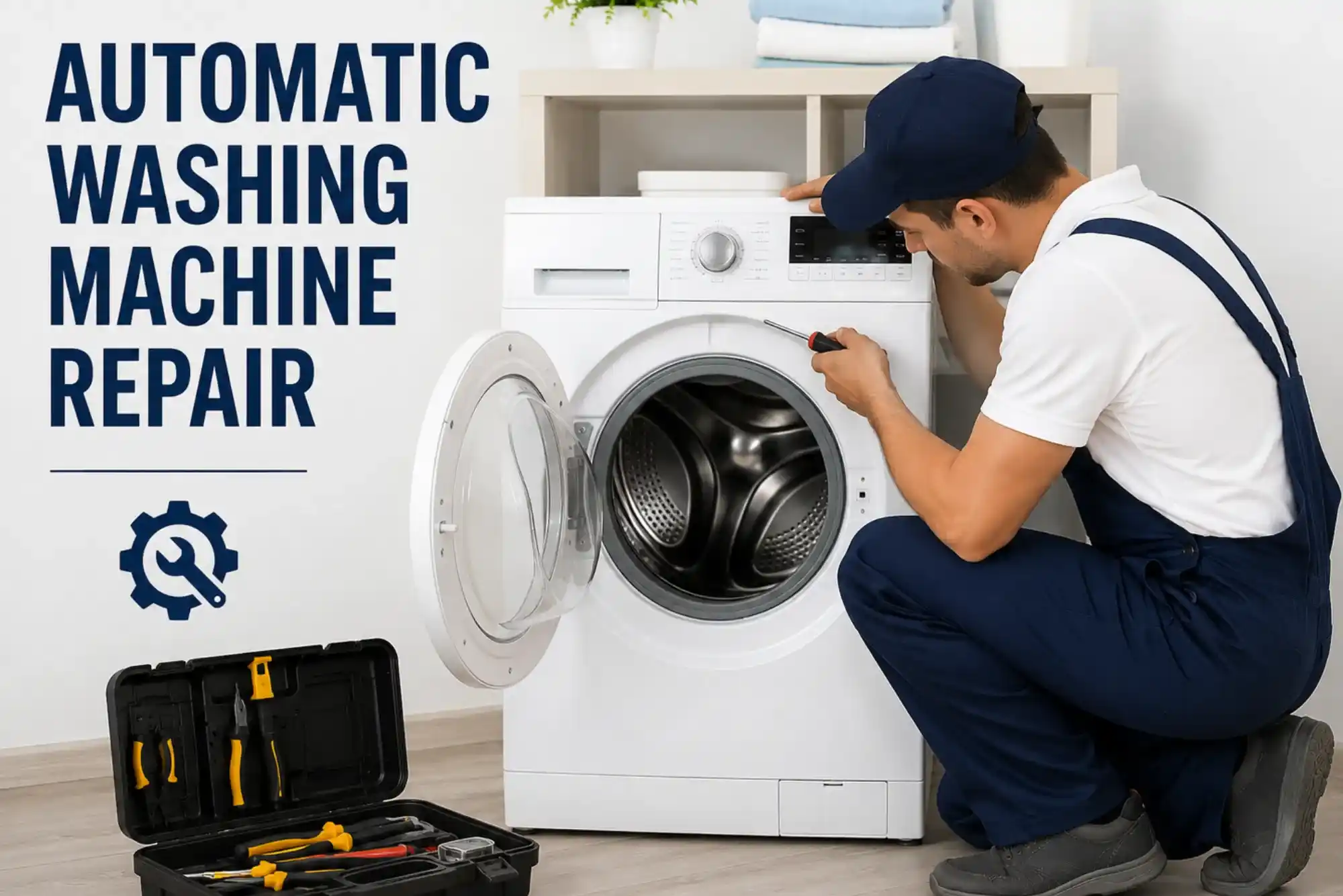
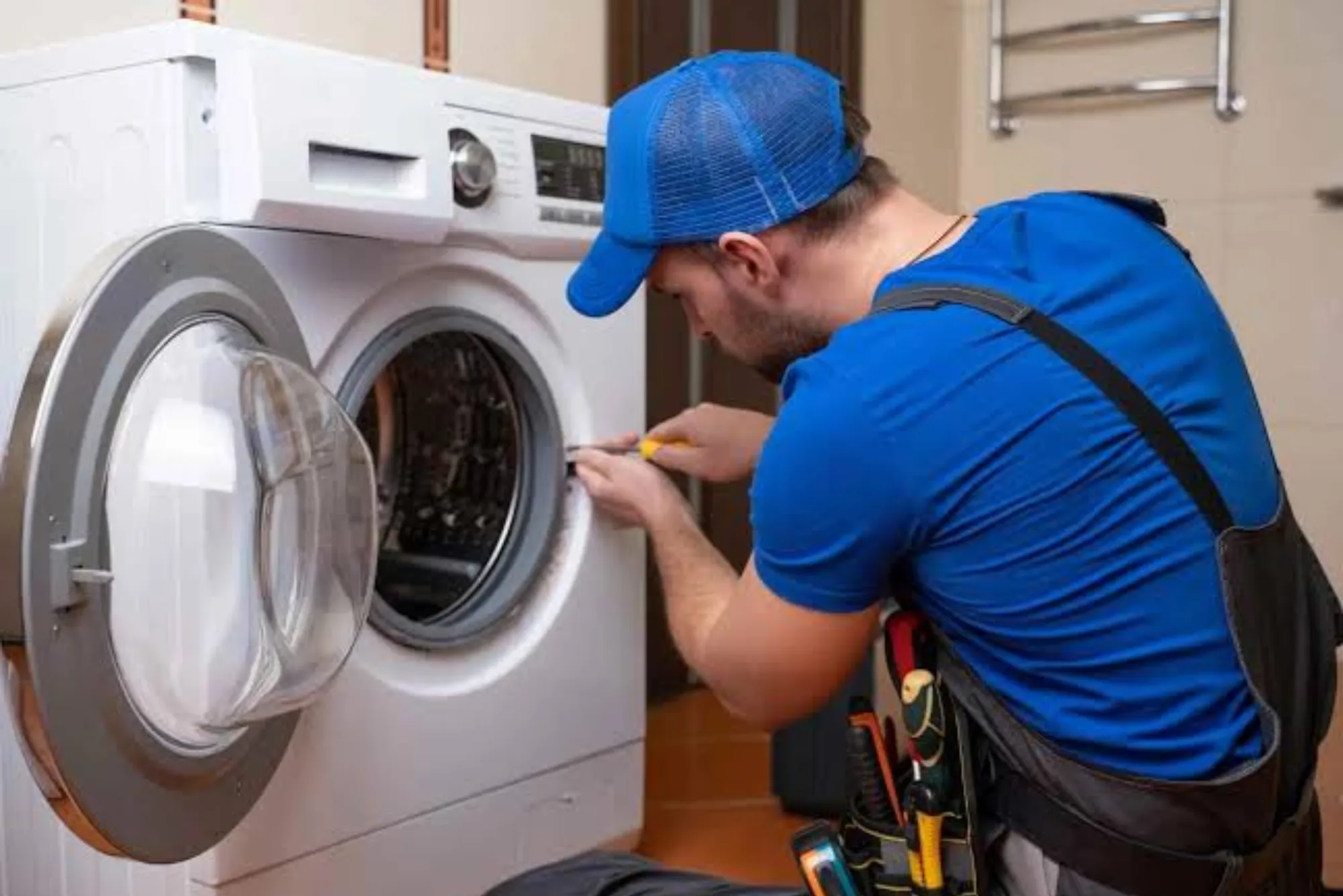
A washing machine is one of the hardest-working appliances in any home. From daily laundry loads to large family wash cycles, it saves time and effort while keeping clothes fresh and clean. However, like any frequently used appliance, it can develop problems over time. Fortunately, understanding the right washing machine troubleshooting steps can help identify common issues before they become expensive repairs.
Many washing machine problems begin with small warning signs such as unusual noises, poor drainage, water leaks, or clothes remaining excessively wet after a cycle. Identifying these symptoms early often prevents further damage and extends the lifespan of the appliance.
This guide explains practical troubleshooting methods, highlights the most common washer faults, and helps you determine when a professional technician is the best solution.
For homeowners seeking reliable repair services and appliance support, Al Barouda also provides valuable maintenance resources and professional washing machine repair solutions.
Why Proper Washing Machine Troubleshooting Matters
Modern washing machines contain numerous electrical and mechanical components working together. When one part begins to fail, other components may also experience additional strain.
Following a logical troubleshooting process helps:

- Identify simple user-related issues
- Avoid unnecessary repair costs
- Improve appliance efficiency
- Reduce unexpected breakdowns
- Increase machine lifespan
- Maintain laundry performance
Instead of replacing a washing machine immediately, many problems can be diagnosed quickly through careful inspection.
Step 1: Check the Power Supply
One of the easiest yet most overlooked washing machine troubleshooting steps is confirming that the appliance receives power.
Inspect the following:
- Power outlet
- Power cord condition
- Circuit breaker
- Fuse box
- Display panel indicators
A loose plug or tripped breaker can often appear to be a major appliance failure when the solution is actually very simple.
Step 2: Inspect the Water Supply
If your washer fills slowly or fails to start washing altogether, the incoming water supply should be inspected next.
Look for:
- Closed water valves
- Kinked inlet hoses
- Blocked inlet filters
- Low household water pressure
Restricted water flow can interrupt normal wash cycles and generate unexpected error messages.
Step 3: Understand Error Codes
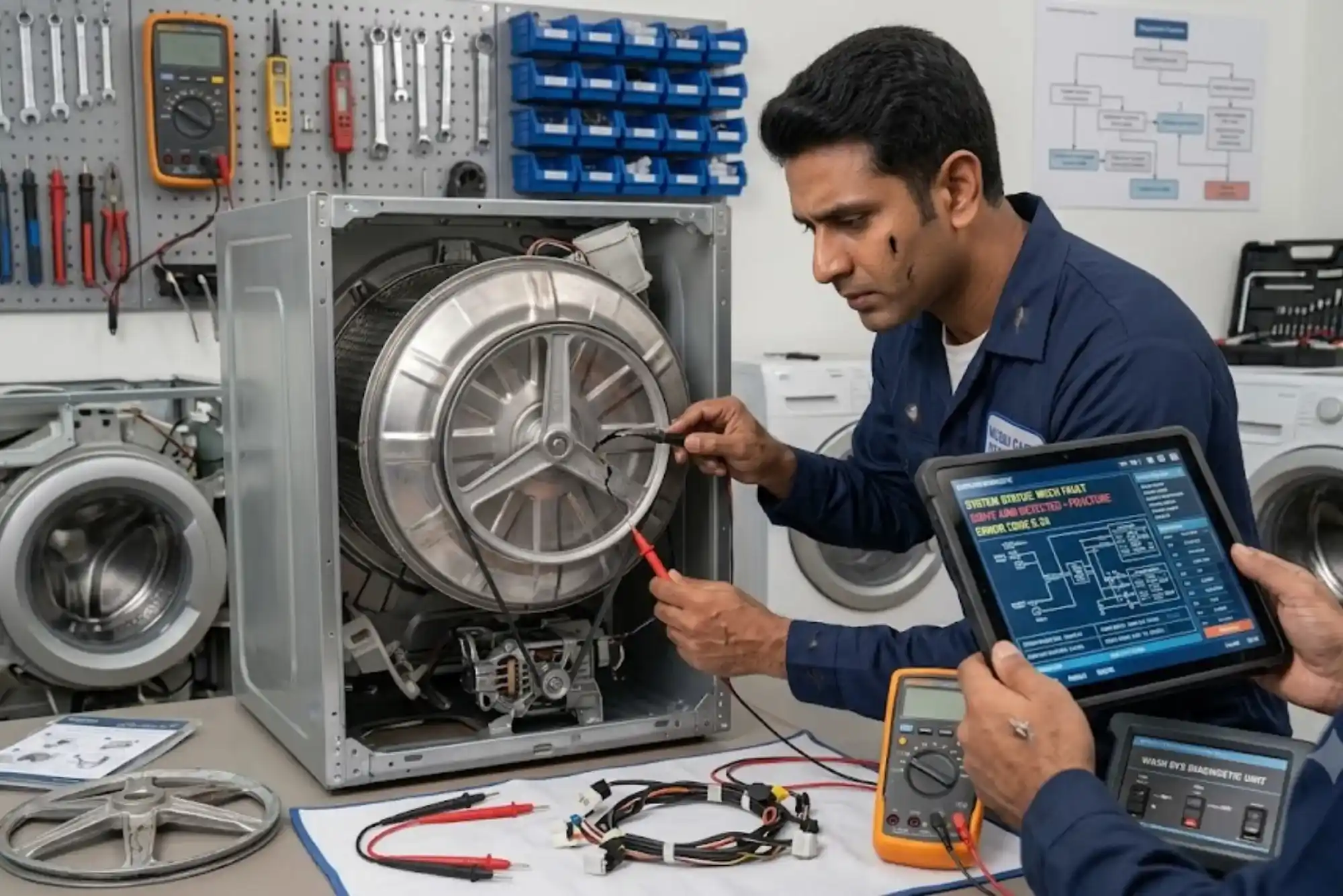
Today’s washing machines include onboard diagnostics that display fault codes whenever the control system detects a problem.
Rather than ignoring these messages, identify the meaning of each code before attempting repairs.
For example, this detailed guide explains several common washer fault codes and possible solutions:
Washing Machine Error Codes Explained
Understanding error codes often reduces guesswork and speeds up repairs.
Step 4: Investigate Drainage Problems
If water remains inside the drum after a cycle, drainage should be checked immediately.
Common causes include:
- Blocked drain hose
- Clogged drain pump filter
- Damaged drain pump
- Foreign objects trapped inside the pump
Ignoring drainage problems can produce unpleasant odours and eventually damage internal components.
If your washer refuses to empty completely, this repair guide provides additional troubleshooting advice:
How to Fix a Washing Machine That Isn’t Draining
Step 5: Check Why the Drum Is Not Spinning
A washer that fills with water but fails to spin may have either a mechanical or electrical fault. Before assuming the motor has failed, inspect several basic components.
These include:
- Overloaded drum
- Unbalanced laundry load
- Drive belt condition
- Door lock mechanism
- Motor operation
- Control board performance
Many spinning issues are easier to diagnose than homeowners expect, especially when the problem results from excessive laundry weight or worn drive components.
For additional guidance, this resource covers one of the most common washer issues in greater detail:
Why Your Washing Machine Is Not Spinning Properly
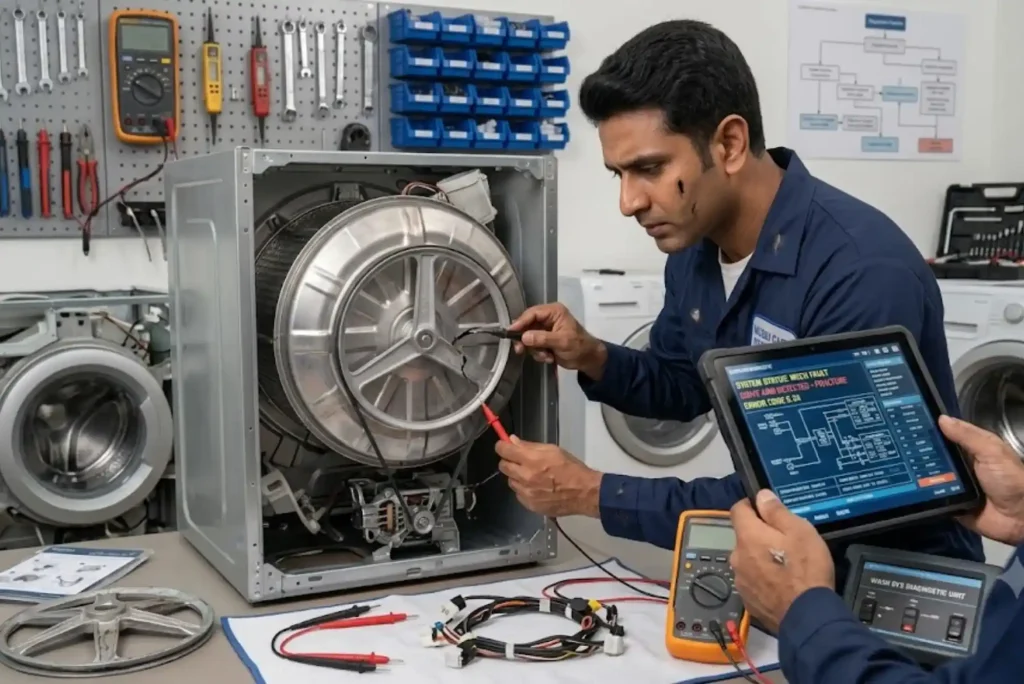
Comparing Common Washing Machine Problems
| Problem | Possible Cause | Recommended Action |
|---|---|---|
| Machine won’t start | Power supply issue | Check outlet, breaker and power cord |
| Water won’t drain | Blocked pump or hose | Inspect and clean drainage system |
| Drum won’t spin | Overload, belt or motor issue | Reduce load and inspect components |
| Error code appears | System fault detection | Identify code before repairing |
Following these washing machine troubleshooting steps allows homeowners to identify many common faults safely while avoiding unnecessary replacement costs. In the next section, we’ll cover water leaks, unusual noises, advanced diagnostics, preventive maintenance, expert recommendations, frequently asked questions, and how to know when professional repair is the smartest option.
More Washing Machine Troubleshooting Steps for Common Issues
While basic inspections can solve many minor washer problems, some issues require a deeper understanding of how different components work together. Continuing with effective washing machine troubleshooting steps helps homeowners identify problems early and decide whether a simple adjustment or professional repair is required.
How to Troubleshoot Washing Machine Water Leakage
Water leaking from a washing machine can create serious problems if ignored. Even a small leak may damage flooring, cabinets, or nearby electrical components.
Common causes of water leakage include:
- Damaged door seal
- Loose hose connections
- Blocked detergent drawer
- Cracked drain hose
- Excessive detergent usage
Start by checking all visible connections around the appliance. Front-load washing machines should receive extra attention around the rubber door gasket because dirt, small objects, and wear can prevent a proper seal.
For additional information about identifying leakage problems, homeowners can review this helpful resource:
Why Your Washing Machine Leaks Water
Checking Unusual Washing Machine Noises
Strange sounds during washing or spinning cycles usually indicate that something inside the machine requires attention. Different noises often point toward different problems.
- Banging sounds: Usually caused by an unbalanced load or loose internal components.
- Grinding sounds: May indicate motor, bearing, or mechanical problems.
- Clicking sounds: Could be caused by trapped objects inside the drum.
- Squealing sounds: Often related to worn belts or moving parts.
Before contacting a technician, remove the laundry load and run a short empty cycle. This helps determine whether the noise comes from the clothes arrangement or from the appliance itself.
Advanced Washing Machine Diagnostics
Modern washing machines use electronic control systems to manage temperature, water levels, spinning speed, and safety features. When these systems develop faults, diagnosis becomes more complex.
Advanced troubleshooting may involve checking:
- Control board operation
- Motor performance
- Sensor accuracy
- Water level switch
- Electrical connections
Electronic components should be handled carefully because incorrect testing methods may cause additional damage.
DIY Troubleshooting vs Professional Washing Machine Repair
| Situation | DIY Troubleshooting | Professional Repair |
|---|---|---|
| Blocked drain filter | Cleaning may solve the issue | Needed if the pump is damaged |
| Machine making noise | Check load balance and objects | Required for bearing or motor faults |
| Error codes | Identify basic meanings | Needed for electrical diagnosis |
| Water leakage | Inspect hoses and seals | Required for internal damage |
Preventive Maintenance Tips for Better Washer Performance
Regular maintenance is one of the most effective ways to avoid frequent washing machine problems. A well-maintained appliance performs better and requires fewer unexpected repairs.
Important maintenance habits include:
- Clean the detergent drawer regularly
- Do not overload the washing drum
- Inspect hoses for cracks or damage
- Clean filters according to manufacturer instructions
- Keep the appliance level on the floor
- Leave the door open after use to prevent moisture buildup
Expert Tip: The best way to prevent major washing machine failures is to respond to small warning signs early. Unusual sounds, slow drainage, and vibration problems should never be ignored because minor issues can become expensive repairs over time.
When Should You Call a Professional Technician?
Although many basic washing machine troubleshooting steps can be completed safely at home, some situations require professional experience.
You should consider professional assistance when:
- The washing machine repeatedly shows error codes
- The motor stops working
- The appliance trips electrical breakers
- Water continues leaking after basic checks
- Internal components need replacement
Professional technicians have specialized tools and experience to diagnose hidden faults accurately without causing further damage.
Frequently Asked Questions About Washing Machine Troubleshooting Steps
What is the first step when a washing machine stops working?
The first step is checking the power supply, including the plug, electrical outlet, and circuit breaker. Many problems are caused by simple power interruptions.
Why is my washing machine not spinning properly?
A washing machine may stop spinning because of an overloaded drum, unbalanced clothes, blocked drainage, worn belts, or motor-related problems.
Can I fix washing machine problems myself?
Basic issues such as cleaning filters, checking hoses, and balancing loads can often be handled safely. However, electrical and internal mechanical repairs usually require professional support.
How often should a washing machine be maintained?
Regular inspection and cleaning every few months can help maintain performance and reduce the chances of unexpected breakdowns.
Why does my washing machine show error codes?
Error codes appear when the machine detects an abnormal condition. The correct solution depends on the specific code and appliance model.
Conclusion
Following the right washing machine troubleshooting steps can help homeowners identify common problems, improve appliance performance, and avoid unnecessary expenses. Simple checks involving power supply, water connections, drainage systems, and load balance can solve many everyday issues.
However, complex problems involving motors, control boards, sensors, or internal components should always be handled by trained professionals. Regular maintenance combined with early troubleshooting ensures your washing machine remains reliable for years.
Related Reading: Washing Machine Troubleshooting Service
Related Reading: AC Bad Odor from Vents